bookmark_borderCopper Connected to Alzheimer’s Disease

Proceedings of the National Academy of Sciences of the United States of America has conducted a study linking the consumption of copper to Alzheimer’s:

Significance
The causes of the sporadic form of Alzheimer’s disease (AD) are unknown. In this study we show that copper (Cu) critically regulates low-density lipoprotein receptor-related protein 1–mediated Aβ clearance across the blood–brain barrier (BBB) in normal mice. Faulty Aβ clearance across the BBB due to increased Cu levels in the aging brain vessels may lead to accumulation of neurotoxic Aβ in brains. In a mouse model of AD low levels of Cu also influences Aβ production and neuroinflammation. Our study suggests that Cu may also increase the severity of AD.

Abstract
Whereas amyloid-β (Aβ) accumulates in the brain of normal animals dosed with low levels of copper (Cu), the mechanism is not completely known. Cu could contribute to Aβ accumulation by altering its clearance and/or its production. Because Cu homeostasis is altered in transgenic mice overexpressing Aβ precursor protein (APP), the objective of this study was to elucidate the mechanism of Cu-induced Aβ accumulation in brains of normal mice and then to explore Cu’s effects in a mouse model of Alzheimer’s disease. In aging mice, accumulation of Cu in brain capillaries was associated with its reduction in low-density lipoprotein receptor-related protein 1 (LRP1), an Aβ transporter, and higher brain Aβ levels. These effects were reproduced by chronic dosing with low levels of Cu via drinking water without changes in Aβ synthesis or degradation. In human brain endothelial cells, Cu, at its normal labile levels, caused LRP1-specific down-regulation by inducing its nitrotyrosination and subsequent proteosomal-dependent degradation due in part to Cu/cellular prion protein/LRP1 interaction. In APPsw/0 mice, Cu not only down-regulated LRP1 in brain capillaries but also increased Aβ production and neuroinflammation because Cu accumulated in brain capillaries and, unlike in control mice, in the parenchyma. Thus, we have demonstrated that Cu’s effect on brain Aβ homeostasis depends on whether it is accumulated in the capillaries or in the parenchyma. These findings should provide unique insights into preventative and/or therapeutic approaches to control neurotoxic Aβ levels in the aging brain.

In a separate study, playing a musical instrument was found to and years to the life of the brain.
bookmark_borderInfections: Don’t Pass It On

The campaign develops and distributes education and communication materials for the VA community that promote:
* Hand hygiene and respiratory etiquette
* Annual seasonal influenza vaccination
* Correct and appropriate use of personal protective equipment
* Pandemic influenza preparedness and response
* Basic public health measures to prevent transmission of infection

What you can do to reduce the spread of infection:

* Avoid close contact with people who are sick.
* Wash your hands often with soap and water, especially after you cough or sneeze. Alcohol-based hand cleaners are also effective.
* Avoid touching your eyes, nose or mouth.
* Stay home when you are sick and limit contact with others.
* Cover your nose and mouth with a tissue when coughing or sneezing. Throw the tissue in the trash after you use it.
* Get your seasonal flu shot.

bookmark_borderDangers to Children: Sun, Bugs and Breathing

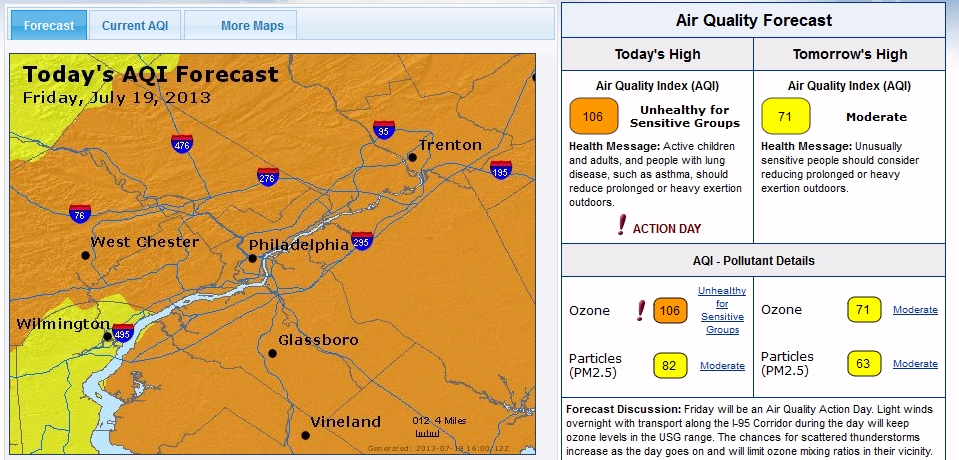
Dangerous Air Quality Due to Ozone Levels

What are three of the most dangerous natural threats to children? Exposure to the sun, mosquitoes (West Nile Virus), ticks (Lime Disease) and breathing. However, reducing your risk to these can create health risks as well. Too much sunscreen may prevent the body from producing vitamin D. The chemicals in insect repellent can pose a slew of long term health risks.

Obviously, not breathing results in death.  For instance, the day this article was in Philadelphia the government issued an “Action Day” where they advise active children not to breath outside.

Learn More About the Dangers of the Sun, Mosquitoes and Breathing
Philadelphia’s Air Quality


bookmark_borderTamiflu-resistant Swine Flu

Research at the World Health Organisation’s Collaborating Centre for Reference and Research on Influenza in Melbourne shows Tamiflu-resistant swine flu is on the rise. The even more concerning part is a drug resistance in the flu strain in virus samples collected from patients who have not been treated with Tamiflu.

“Rates of Tamiflu resistance remain low globally although Roche takes the issue of resistance very seriously and collaborates with international organizations and authorities to monitor the situation,” said Daniel Grotzky of Roche.

bookmark_borderAlternative Solutions For Health Problems

Dr. Ronald Dushkin
250 West 49th Street
New York, NY 10019

Holistic Medicine, often called “Alternative or Complementary Medicine,” is an approach to medical care that focuses on treating the whole person – physically, emotionally and spiritually – and it encourages patient participation in one’s own healing process. Many people seek Homeopathy and other Holistic modalities simply because conventional medicine has not been effective for them.

Dr. Dushkin treats people using alternative, natural, and safe Homeopathic remedies. These FDA approved natural medicines are made primarily from plants and minerals, and stimulate a person’s own natural healing mechanisms to create health and balance from within.

Some of the conditions Dr. Dushkin has successfully treated with Homeopathy include:

ACNE, ADHD, ALLERGIES, ANXIETY, ASTHMA, CHRONIC EAR INFECTIONS, DEPRESSION, ECZEMA, FATIGUE, HEADACHES, HYPERTENSION, INSOMNIA, IRRITABLE BOWEL SYNDROME (IBS), MENSTRUAL PROBLEMS, MENOPAUSAL PROBLEMS, PANIC ATTACKS, PMS, PSORIASIS, SINUSITIS, STRESS RELATED CONDITIONS

Contact

Member of the Wellness Network