UNITED STATES — Protests against Monsanto were held throughout the nation including several locations in the Delaware Valley. Consumers are concerned about their health and wellness of Monsanto. The pesticide Round Up is speculated to be behind the bee colony collapse, as well as, neurological disorders to humans.
The company’s attempt to create a monopoly over seeds through GMO patents was one of the crowds gravest concerns.
Many people are concerned about Monsanto genetically engineering food crops; however, there is no evidence that genetically modified food is harmful to your health. That is to say, at least the plant is harmful to humans.
On the other hand, Monsanto developed Roundup — a commercially available herbicide (also known as Glyphosate.) Roundup has been proven to be harmful to humans. By developing a Roundup-tolerant crop, isn’t Monsanto promoting the use of the herbicide?
Also, the development of similar resistance in some weed species is emerging creating Monsanto-resistant plants.
1. Climate change threatens human health and well-being in many ways, including impacts from increased extreme weather events, wildfire, decreased air quality, diseases transmitted by insects, food and water, and threats to mental health. Some of these health impacts are already underway in the U.S.
2. Climate change will, absent other changes, amplify some of the existing health threats the nation now faces. Certain people and communities are especially vulnerable, including children, the elderly, the sick, the poor, and some communities of color.
3. Public health actions, especially preparedness and prevention, can do much to protect people from some of the impacts of climate change. Early action provides the largest health benefits. As threats increase, our ability to adapt to future changes may be limited.
4. Responding to climate change provides opportunities to improve human health and well-being across many sectors, including energy, agriculture, and transportation.
by Daniel Brouse
What better gift to give someone than health and wellness? Herbs are a great tradition.
Parsley
Parsley is rich in minerals, iron, antioxidants, chlorophyll, vitamins A and C. Parsley is a traditional remedy that reduces flatulence, freshens breath, aids in digestion, antidote for poisons, calms nerves and anemia.
Sage
Sage is a traditional remedy that aids healing, used as a bandage, toothbrush for the American Indian or with bear fat to rub in the skin, improves memory, aids in digestion of meats, throats and tonsillitis.
Rosemary
Rosemary is rich in calcium, vitamins A and C. Rosemary is a traditional remedy that is a cure-all, breath cleanser, calms a cough, improves memory, antiseptic, cures headaches and aids in anti-aging.
Thyme
Thyme is rich in methyl and is a traditional remedy that can be used as an antiseptic, anti-fungal, fighting parasites, invigorating, good for teeth and gums, treating headaches, warts, bruises and stings.
Basil
Basil is rich in methyl and is a traditional remedy that reduces indigestion, is a breath freshener, cures nausea and stomach ailments.
Basil has long been used by damsels in distress for love potions. Some believe sharing a sprig will cause the person to fall in love with you. Others put it under their pillow or in their undergarment drawer.
Mint
Mint is rich in methyl and is a traditional remedy for stomach ailments.
The essential oil of peppermint (up to 2.5% in the dried leaves) is mostly made up from menthol (ca. 50%), menthone (10 to 30%), menthyl esters (up to 10%) and further monoterpene derivatives (pulegone, piperitone, menthofurane). Traces of jasmone (0.1%) improve the oil’s quality remarkably.
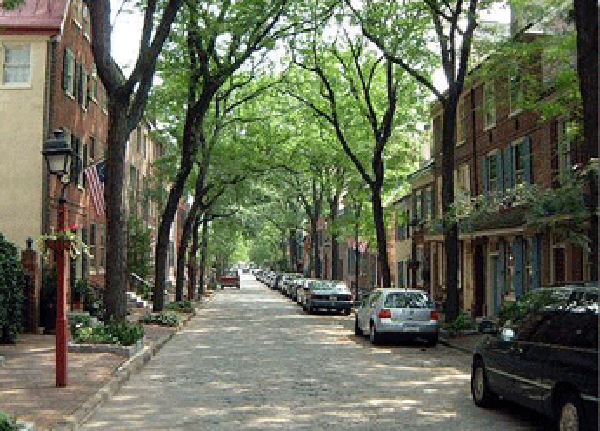
PHILADELPHIA, PA — Homes in Society Hill offer the finest in real estate value that the Philadelphia area has to offer. The district displays a splendid array of luxury homes sited along tree lines streets. There is a stunning variety of architectural treasures to be found along the lanes here that are often made up of cobblestones befitting the historic nature of this old established area. Many of the luxury homes found here date back to the 18th and early 19th Century. They have been lovingly tended and represent high value real estate. Learn more about Society Hill Homes online.
Many of these luxury homes are listed in the National Register of Historic Places. In addition to the single family luxury homes available here, there is a profusion of Federal and Georgian style townhouses interspersed with more modern high rise residential towers filled with modern condos and apartments.
Society Hill takes its name from the Society of Traders, an 18th Century association of merchants who had their headquarters here on Front St. The group was headed by William Penn and was instrumental in controlling commerce with England.
The area is rich in history and includes Independence National Historic Park. Throngs of visitors flock here to visit Independence Hall where the Constitution was written. The park complex also serves as a focal point for the community.
So Much to See Here
Many visitors to Independence Park take the time to walk around this district stopping to admire the impressive architecture to be found in luxury homes. The area is considered to be one of the highest value places for real estate in the Philadelphia region. Most residents here are relatively affluent, and there are many smart shops and restaurants designed to appeal to their tastes.
Head House Square is another popular destination for visitors. This historic zone has many shops and cafes and hosts a farmer’s market every weekend. Walnut Street marks the northern boundary of Society Hill and Lombard St. the southern. East to west, the district stretches from the Delaware River to Lombard St.
History Predominates Throughout
Society Hill has always played an important role in the civic life of Philadelphia. Early on, it became one of the most populous districts. The real estate here has long been associated with luxury homes. The affluent citizens of yesteryear choose to build brick houses in this locale. In addition, the region developed market halls and other sites devoted to commerce. There were churches and taverns as well.
In the 19th Century, Philadelphia’s growth was mainly a westward expansion, and the region began to fall out of favor. Society Hill seemed to have been left behind, and by the 50’s many of the old luxury homes were looking anything but. Many had fallen into disrepair, but then city, state, and federal government joined together in one of the first urban renewal projects undertaken in this country. Things have been looking up ever since. Society Hill is once again valuable real estate where luxury homes abound.
 0:47 Monsanto-Protest-West-Chester-PA-May-25-2013 KingArthurCom Marchers took to the streets of downtown West Chester to oppose Monsanto Company — the use of genetically modified foods, Round Up, pesticides, bee colony collapse, Agent …
  0:42 Monsanto-Protest-West-Chester-PA-May-25-2013 2) KingArthurCom Marchers took to the streets of downtown West Chester, Pennsylvania to oppose Monsanto Co. and the use of genetically modified foods, Round Up, pesticides, bee colony colla…
  Monsanto-Protest-West-Chester-PA-May-25-2013 1) KingArthurCom Marchers took to the streets of downtown West Chester, PA to oppose Monsanto Company’s use of genetically modified foods, Round Up, pesticides, bee colony collapse and othe…