bookmark_borderTurkey Seasoning with Healthy Herbs

Growing some herbs on a window sill is a good way to keep eating healthy all year round. When it comes to Thanksgiving and Christmas, you can increase the health benefits of your food by adding herbs to just about everything you serve.

Rosemary, thyme and sage make an excellent combination when preparing your turkey. Finely dice the herbs for inclusion in the stuffing mix. Then, create a rub for application prior to cooking. Throughout the cooking process, sprinkle herbs over the top.

You can also add fresh herbs to your other dishes. Add some parsley to mashed potatoes. Add some basil to your vegetable dishes. Keep some aloe on-hand in case of kitchen burns.

VIDEO: Turkey Seasoning Healthy Herbs — Rosemary, Thyme, Sage.mp4


Herbs for Turkey Seasoning -- Rosemary, Thyme, Sage
Herbs for Turkey Seasoning — Rosemary, Thyme, Sage

More on Foraging for Food in the Winter

bookmark_borderUruguay And Medical Cannabis

MONTEVIDEO, URUGUAY — The use of marijuana was already legal in Uruguay. Now, it is the first country in the world to legalize the cultivation and sale of the drug.

There has been growing evidence and consensus on the health benefits of cannabis. There are currently 20 US states (and Washington DC) that have legalized the use of medical marijuana. “Cannabis has been used to reduce nausea and vomiting in chemotherapy and people with AIDS, and to treat pain and muscle spasticity.” Recent research has also pointed to a reduction in risk of cancer, as well as, possible cures.

“Our country can’t wait for international consensus on this issue,” said Uruguay Senator Roberto Conde. Rich countries debating legalization of pot are also watching the bill, which philanthropist George Soros has supported as an “experiment” that could provide an alternative to the failed U.S.-led policies of the long war on drugs,” reported Reuters.

South America: Uruguay

Uruguay
Uruguay

bookmark_borderDangers to Children: Sun, Bugs and Breathing

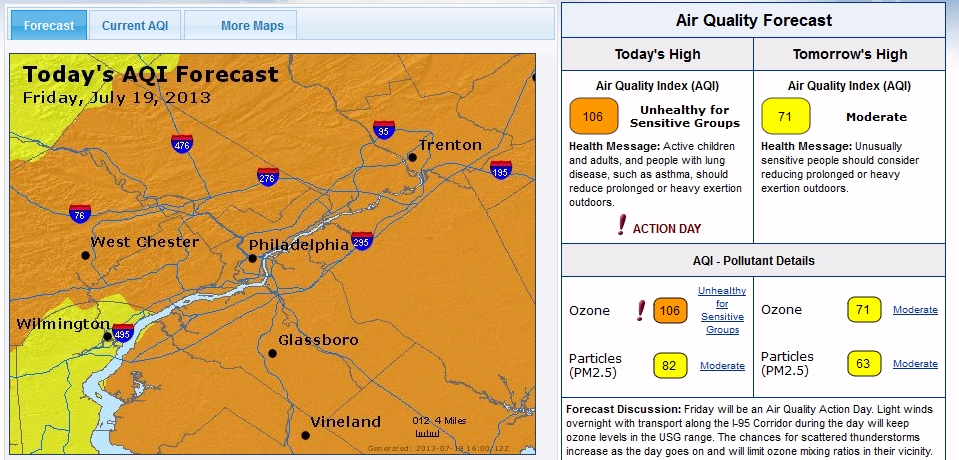
Dangerous Air Quality Due to Ozone Levels

What are three of the most dangerous natural threats to children? Exposure to the sun, mosquitoes (West Nile Virus), ticks (Lime Disease) and breathing. However, reducing your risk to these can create health risks as well. Too much sunscreen may prevent the body from producing vitamin D. The chemicals in insect repellent can pose a slew of long term health risks.

Obviously, not breathing results in death.  For instance, the day this article was in Philadelphia the government issued an “Action Day” where they advise active children not to breath outside.

Learn More About the Dangers of the Sun, Mosquitoes and Breathing
Philadelphia’s Air Quality


bookmark_borderChinese Food Health Tips

by Merck — Whether you decide on Szechuan, Cantonese, or Hunan style, there are ways to translate your meal into something healthy.

You’ll find lots of fried foods on many Chinese menus, along with plenty of meat recipes and dishes made with eggs. Chinese food can be high in sodium, too. Fortunately, there are healthier options.

Here’s some food for thought before you choose:

Instead of Try
Egg drop soup Wonton or hot-and-sour soup
Egg rolls or fried wontons Steamed vegetable dumplings
Fried entrees Boiled, broiled, steamed, or lightly stir-fried entrées
Meat dishes Vegetable dishes
Fried rice Steamed rice
Lobster sauce (has egg yolks) Sweet-and-sour sauce, plum, or duck sauce (but watch the sodium)


A little of this, a little of that

You don’t have to eat till you’ve had too much, either. Chinese menus often have a lot to offer, and in large portions. So why not divvy it up? Order a variety of entrées with your companions—then you can try a little of everything. Oh yes, and you’ll probably want to ask the cook to leave out the soy sauce, monosodium glutamate (MSG), and salt.

bookmark_borderOlive Oil

New studies suggest that olive oil is an important part of your diet and may improve your quality of life; however, the making of olive oil is not that environmentally friendly.

The USDA says: For every gallon of olive oil that’s pressed from the ripe fruit, about 38 pounds of olive skins, pulp and pits are left behind. Known as pomace, these leftovers typically have low-value uses. But U.S. Department of Agriculture (USDA) agricultural engineer Rebecca R. Milczarek and her colleagues are working with olive growers and olive-oil processors in California—where most of the nation’s commercial olives are grown—to find new, environmentally friendly, and profitable uses for pomace.

According to Milczarek, pomace from California mills is usually a wet, heavy goulash that ranges in color from green to brown to black to purple, and has an aroma somewhat like that of olive tapenade, a flavorful spread made of finely chopped or puréed olives, anchovies, capers, garlic and olive oil.

Milczarek notes that one key to creating higher-value uses for pomace is to develop techniques that millers can use to quickly and affordably dry it on-site. That would make the pomace lighter, and easier and less expensive to ship to, for example, a centralized processing plant. There, specialized equipment could be used to extract additional oil or perhaps compounds for use in new foods, pharmaceuticals, cosmetics or other products.

In her research, Milczarek is investigating the dynamics of drying pomace. The goal of these studies is to determine precisely how long it would take for water to diffuse from the pomace under specific conditions.

In preliminary experiments, documented in a 2011 peer-reviewed article in the Journal of Food Engineering, Milczarek’s team dried small batches of fresh pomace, using a combination of microwave and convection (hot forced air) heating. The drying rates for the four internal temperatures studied—104 degrees, 122 degrees, 140 degrees, and 158 degrees Fahrenheit—averaged about 28 percent lower than those reported in some studies conducted by other scientists.

The bottom line? Lower drying rates mean more drying time is needed in order for the pomace to dry sufficiently.

What can olive mills do about that? For commercial drying, pomace would be carried on a conveyor belt through a “drying tunnel.” With the drying rates in mind, the tunnel could be lengthened, or the conveyor belt could be slowed, to ensure that pomace emerging from the tunnel isn’t damp and prone to mold.

Of course, drying adds to mills’ energy costs. However, the combination of microwave and convection drying that Milczarek tested is inherently more energy-efficient than drying options that are based solely on convection, she points out.

Two features of Milczarek’s study—keeping the pomace’s internal temperature steady when testing each temperature regimen, and taking pomace shrinkage into account—likely made the research unique among olive-pomace-drying experiments and contributed to the accuracy of her results.

Milczarek is with the USDA Agricultural Research Service (ARS) Western Regional Research Center in Albany, Calif. ARS is the USDA’s chief intramural scientific research agency.